

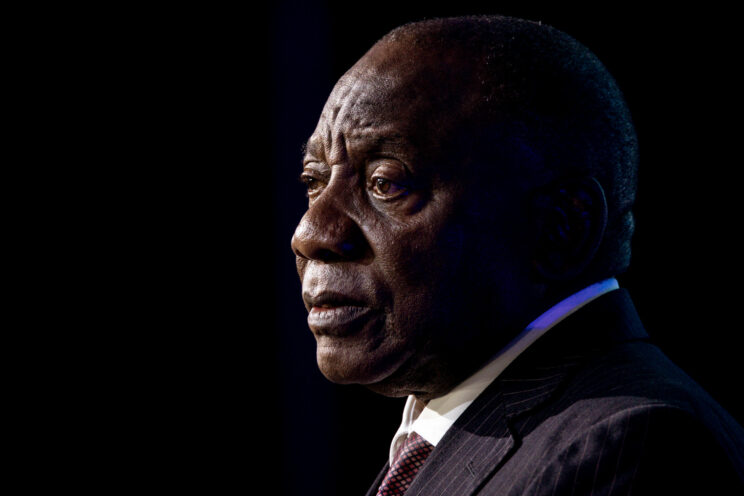
Earlier this month, on 03 May, South African President Cyril Ramaphosa made a private visit to President Emmerson Mnangagwa’s Precabe Farm in Kwekwe, Zimbabwe, sharpening regional attention on the country’s deepening constitutional dispute amid concerns that proposed changes to Zimbabwe’s founding rules could trigger instability well beyond Harare.
This article was first posted HERE on National Security News Website
While both governments have since publicly framed the meeting as a routine bilateral engagement, its timing has made that explanation difficult to sustain. Zimbabwe’s Parliament is expected to consider Constitutional Amendment Bill No. 3 before the end of May, a measure that would extend presidential and parliamentary terms from five to seven years and replace the direct election of the president with a vote by Members of Parliament sitting as an electoral college.
That shift has turned what might once have been treated as an internal ZANU-PF matter into a broader constitutional and regional stability test. The question is no longer simply whether President Mnangagwa can secure more time in office. It is whether Zimbabwe’s political transition will be governed by the constitution or by last-minute changes designed to benefit those already in power.
Vice President Constantino Chiwenga has emerged as a central figure in that debate, but those close to the issue insist the matter should not be reduced to a personal contest between him and Mnangagwa. The more important question, they argue, is whether any leader should be permitted to rewrite the rules of succession while still holding office.
Chiwenga has not mounted a public campaign for power. That restraint is politically significant. In a climate increasingly defined by factional pressure, patronage networks and speculation about the post-2028 succession, his position is being interpreted by many observers as a defence of constitutional order rather than a bid for personal advancement.
The distinction matters. Zimbabwe’s current constitution was designed to prevent precisely the kind of executive overreach that has destabilised many African political systems: incumbents amending the rules late in the political cycle, narrowing public choice, and presenting continuity as stability. Critics of the amendment argue that genuine stability depends not on extending mandates, but on predictable rules that bind every office-holder equally.
Ramaphosa’s trip also underlines South Africa’s stake in the outcome. Pretoria has long preferred quiet diplomacy in Zimbabwe, but a constitutional rupture in Harare would carry direct consequences for South Africa, from migration pressure to regional investor confidence and SADC credibility. Reports that Ramaphosa may have urged Mnangagwa to abandon or delay the amendment reflect the seriousness with which Pretoria is now treating the issue.
The optics of the visit have only intensified scrutiny. The reported presence of politically connected business figures at the meeting has fuelled concerns that Zimbabwe’s constitutional debate is being shaped not through transparent public deliberation, but through informal networks of political and commercial influence. Recent media coverage has strengthened the perception that the amendment is linked not only to succession, but also to elite capture and opaque decision-making.
For Zimbabwe’s institutions, the test is now clear. Public hearings and parliamentary procedure cannot by themselves cure a constitutional defect. Consultation is not the same as consent. If the amendment changes how presidents are chosen, extends the terms of those already in office, or weakens the public’s direct vote, it must be judged against the higher standard of constitutional legitimacy.
That is why Chiwenga’s most effective posture may be his least dramatic one: not as a claimant to power, but as a senior national figure unwilling to endorse rules being rewritten for anyone’s personal benefit.
As one constitutional observer put it: “The responsible position is not to demand power. It is to defend the rules by which power is transferred.”
With a parliamentary decision now approaching, Zimbabwe faces a defining choice. It can preserve the constitutional settlement that limits power, protects direct public choice and provides for orderly transition. Or it can turn a succession question into a constitutional crisis.
Ramaphosa’s recent visit suggests the region already understands the stakes.

Leave a Reply